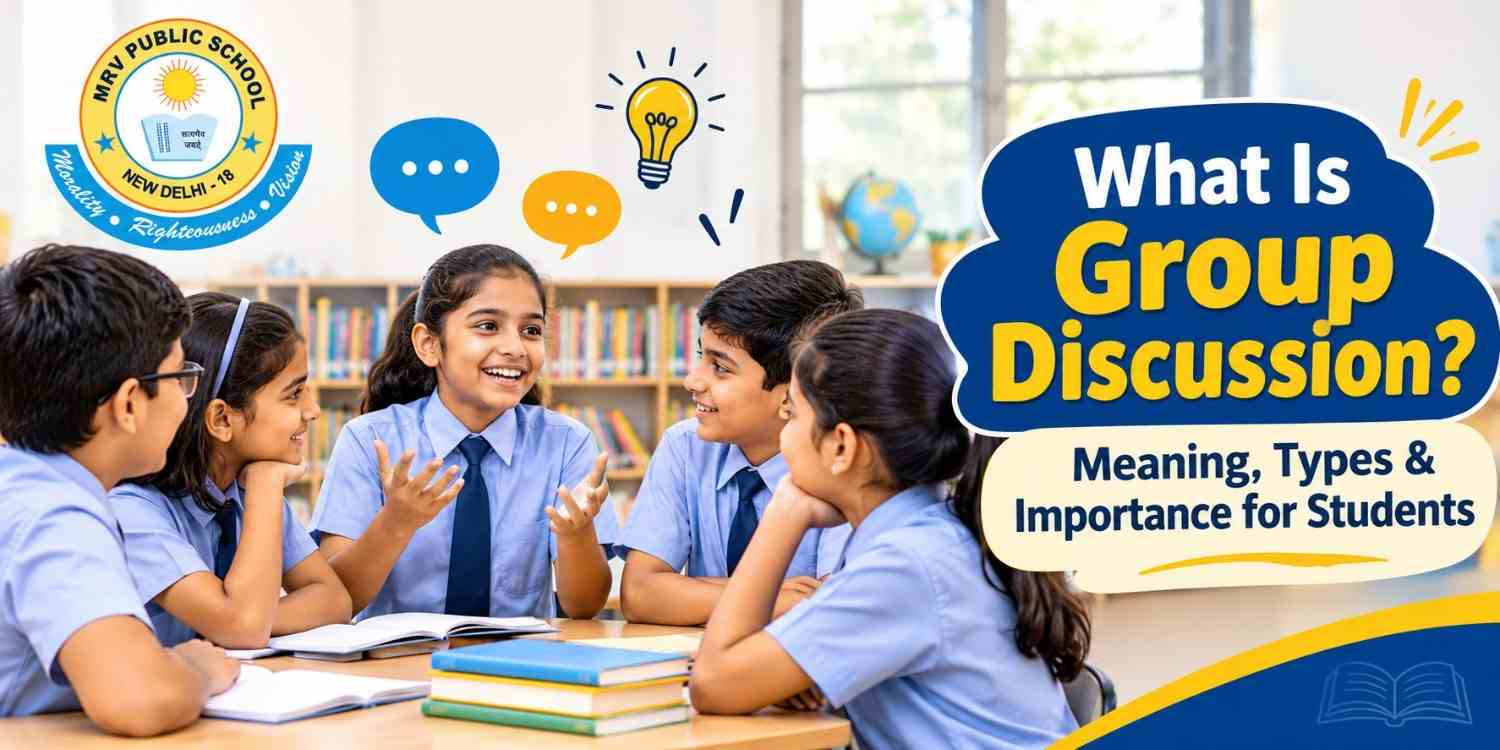
Group discussion is an important part of student development because it teaches children to communicate, share ideas, and understand different perspectives. Whether discussing a classroom topic, solving a problem, or exchanging opinions, students learn valuable skills through meaningful conversations. But what is group discussion, what are its different types, and why is it important for students? Understanding its meaning and benefits helps parents and teachers recognise how interactive learning supports academic and personal growth.
At MRV Public School, a CBSE-certified school in Tilak Nagar with over 25 years of educational experience, the focus extends beyond academics to holistic student development. Parents exploring Nursery Admission in Vikaspuri can also consider how opportunities for communication, teamwork and confidence building contribute to a child's overall learning journey.
What Is Group Discussion? Meaning and Purpose
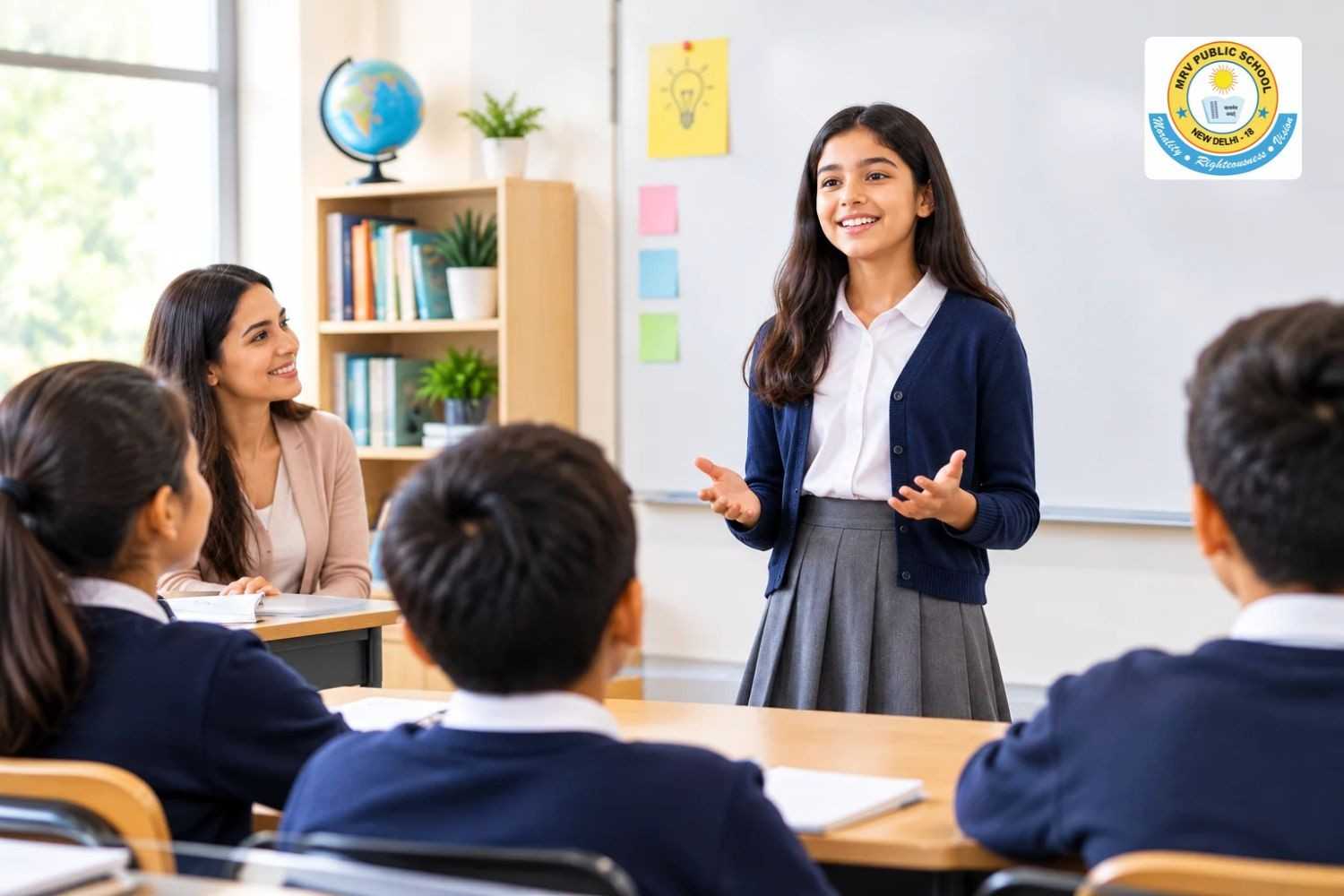
A group discussion (GD) is a conversation in which several participants exchange ideas, opinions, and information about a particular subject. Participants listen, ask questions, present arguments, and consider different perspectives.
In simple terms, group discussion meaning refers to sharing and developing ideas through communication with others.
In schools, teachers use discussions to make classroom learning interactive. For example, students discussing whether technology improves education may explore online learning, digital resources, and the importance of face-to-face teaching.
The objective is not to prove someone wrong. It is to understand a subject from different perspectives.
What Are the Different Types of Group Discussion?
The types of group discussion depend on the learning objective, topic, and participation format.
1. Topic-Based Discussion
Students receive a subject and share their opinions. Examples include environmental protection, reading habits, and the importance of education.
2. Opinion-Based Discussion
Participants express different viewpoints about social or everyday issues. This encourages logical reasoning and respect for diverse opinions.
3. Knowledge-Based Discussion
Students discuss subjects connected to their academic curriculum, such as renewable energy, historical events, or scientific discoveries.
4. Case-Based Discussion
Participants examine a situation, identify problems, and suggest possible solutions. This develops analytical and problem-solving skills.
5. Role-Based Discussion
Students take different roles, such as teacher, environmentalist, or community leader, and discuss a subject from their assigned perspectives.
What Is the Importance of Group Discussion for Students?
The importance of group discussion for students extends beyond speaking confidently. It helps develop practical abilities that support academic learning and personality development.
1. Improves Communication Skills
Students learn to organise their thoughts, explain opinions, and communicate clearly. Regular practice can strengthen verbal communication and public speaking skills.
2. Builds Confidence
Speaking in a group gives students opportunities to overcome hesitation. A supportive classroom environment allows quieter students to participate at their own pace.
3. Develops Leadership Skills
Introducing topics, encouraging participation, and summarising conversations help students practise responsibility and leadership.
4. Encourages Teamwork
Students learn to cooperate, respect different opinions, and work towards a shared understanding. These experiences strengthen teamwork and collaborative learning.
5. Develops Critical Thinking
Considering different arguments encourages students to examine information, ask questions, and form reasoned opinions.
6. Improves Active Listening
A good discussion requires more than speaking. Students must listen carefully, understand other viewpoints, and respond appropriately.
How Are Group Discussions Used in School Education?
Group discussion in education creates opportunities for students to participate actively rather than depend entirely on textbook explanations.
Teachers can introduce classroom discussion activities across different subjects:
English: Discuss a story's message or characters.
Science: Explore environmental conservation.
Social Studies: Discuss community responsibilities.
Computer Education: Exchange ideas about responsible technology use.
Such activities encourage student participation, creative thinking, and decision-making skills.
Schools focusing on Computer Education in West Delhi can also connect digital learning with discussions about online responsibility, technology, and everyday problem-solving.
What Are the Basic Rules of Group Discussion?
Effective discussions need simple rules that encourage respectful communication.
Listen without interrupting.
Allow everyone an opportunity to speak.
Stay relevant to the topic.
Support opinions with logical examples.
Respect disagreements.
Avoid dominating the conversation.
Use clear and polite language.
Summarise the important points.
Following these group discussion techniques makes conversations more productive and inclusive.
How Can Students Improve Their Group Discussion Skills?
Students do not need exceptional speaking abilities to participate effectively. Preparation and regular practice matter more.
Here are five practical group discussion activities in school:
Think-Pair-Share: Think independently, discuss with a partner, and share the conclusion.
One-Minute Speaking: Explain an idea within one minute.
Role Play: Discuss a situation from different assigned perspectives.
Problem-Solving Challenge: Work together to suggest solutions to a classroom problem.
Story Discussion: Exchange opinions about a story and its message.
Useful group discussion topics for students include environmental protection, healthy habits, the importance of reading, technology in education, and teamwork.
These activities can be adapted to different age groups and learning levels.
How Does MRV Public School Support Holistic Student Development?
Quality School Education in West Delhi should support academic progress alongside confidence, creativity, and essential life skills.
MRV Public School is a CBSE-affiliated school in Tilak Nagar offering education from Pre-Primary to Senior Secondary. With over 25 years of educational experience, the school provides experienced teachers, smart classrooms, and a child-centric learning environment.
Its educational approach combines academics, extracurricular activities, and value-based education. The CCTV-monitored campus supports student safety, while the school aims to nurture responsible, knowledgeable, and compassionate individuals.
Frequently Asked Questions For Group Discussion
Is group discussion important for students?
Yes. It provides opportunities to practise communication, teamwork, active listening and critical thinking.
Does group discussion improve public speaking?
Yes. Regular participation helps students organise their thoughts and become more comfortable speaking in front of others.
What is the difference between group discussion and debate?
A group discussion encourages the exchange of ideas, while a debate generally involves presenting opposing arguments on a particular issue.
Can shy students participate in group discussions?
Yes. Teachers can begin with smaller groups, familiar subjects and short speaking activities to encourage gradual participation.
What makes a group discussion successful?
Respectful communication, relevant contributions, active listening and balanced participation help create productive discussions.
Why Group Discussion Matters in a Student's Overall Development
Group discussion is more than a classroom conversation. It gives students opportunities to communicate, think critically, cooperate and understand different perspectives.
Schools that encourage interactive learning help students develop abilities that extend beyond academic subjects. MRV Public School focuses on academic excellence and holistic student development, helping children prepare for educational and everyday challenges.
Looking for a school that values your child's overall development? Connect with MRV Public School to learn more about its academic programmes, learning environment, and admission opportunities. Contact the school today to discuss how it can support your child's educational journey and future growth.