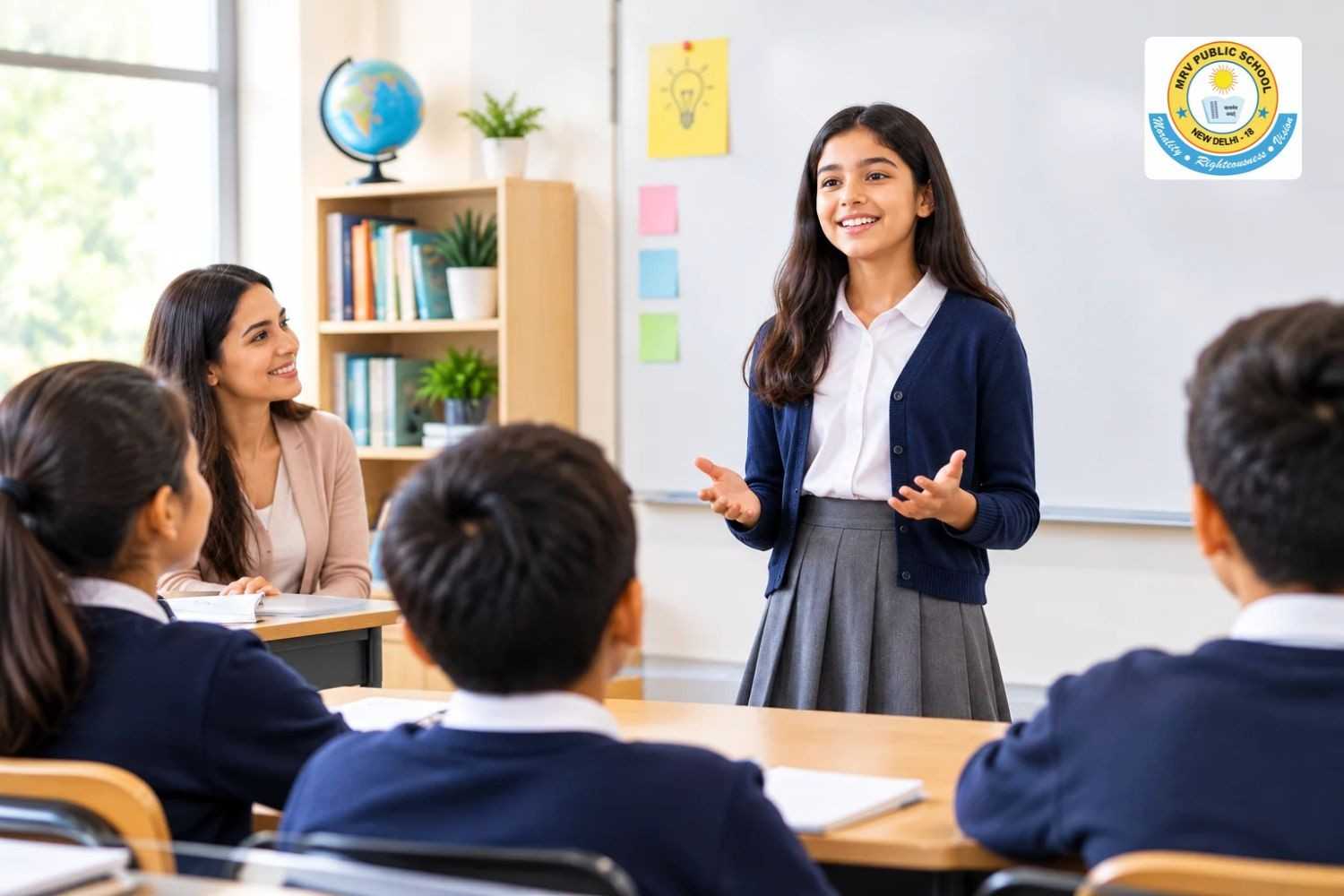
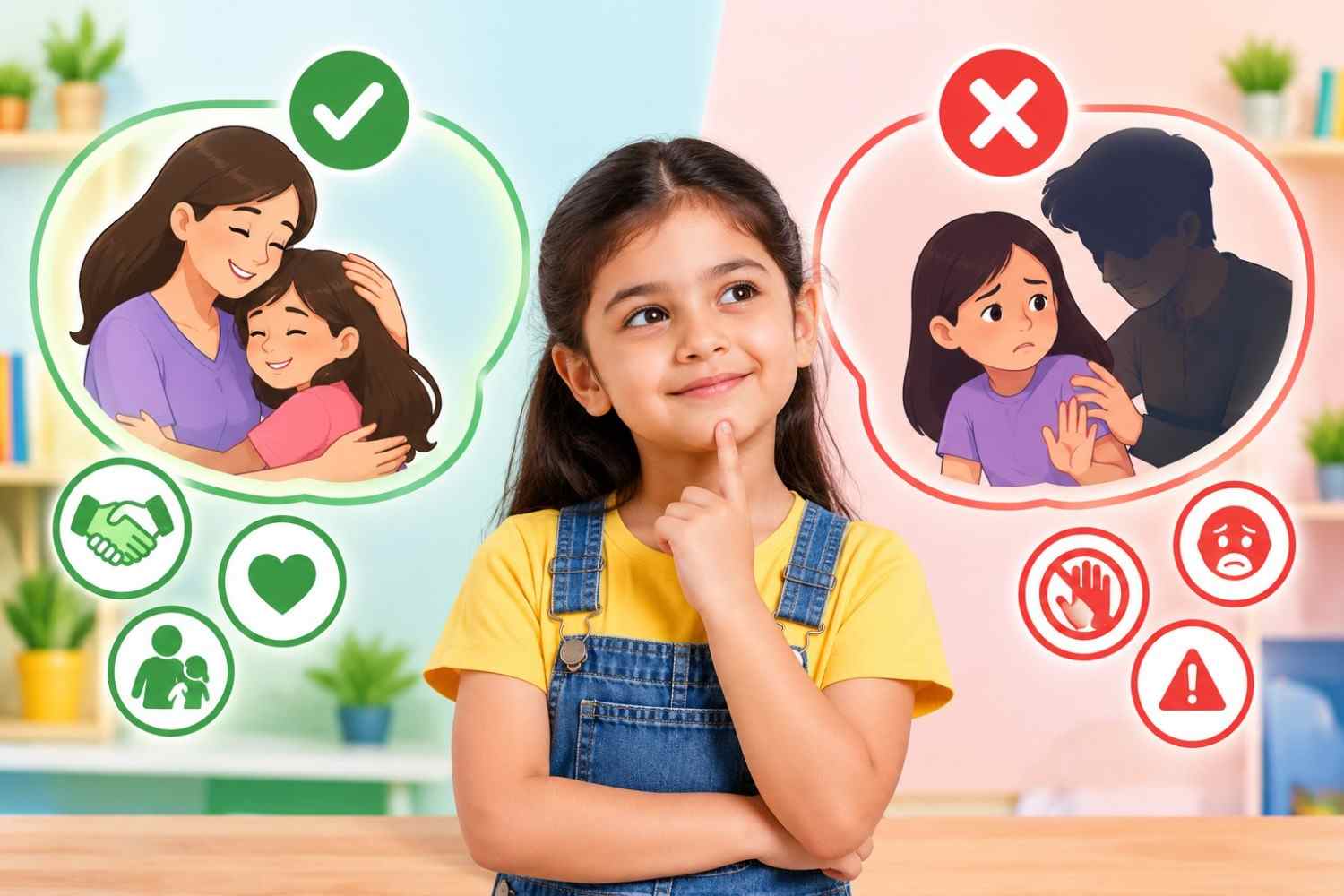
Children love hugs, playing games, spending time with family and making new friends. But while growing up, they also need to understand an important thing: their body belongs to them, and nobody has the right to cross their personal boundaries. That's why parents and teachers should start conversations about body safety early. Whether you are a parent or a teacher at a CBSE-certified school in Tilak Nagar, helping children understand good touch and bad touch is an important part of their overall development.
At MRV Public School, we believe that education goes beyond textbooks. Children should also learn about personal safety, respect and the confidence to speak up when something doesn't feel right. Let's understand how parents and teachers can explain these lessons through simple examples and everyday conversations.
What Is Good Touch and Bad Touch?
Children don't need complicated explanations to understand personal safety. Start with familiar situations and explain that physical contact should always respect their body, privacy and boundaries.
What Is Good Touch?
A good touch is generally safe, appropriate and respectful physical contact. Examples include a hug that a child welcomes, a high-five from a teacher or holding a parent's hand while crossing the road.
A doctor may also need to examine a child for a health concern. Adults should explain what they are doing, respect the child's dignity and follow appropriate safeguards.
What Is Bad Touch?
Bad touch refers to inappropriate or harmful physical contact that violates a child's personal boundaries. For example, someone touching private body parts for inappropriate reasons, forcing physical contact or asking a child to touch another person's private parts.
Remember, unsafe behaviour doesn't always cause physical pain. A child may feel confused, frightened or unable to react. Even if a child doesn't immediately recognise what happened, the behaviour is not their fault.
10 Important Points on Good Touch and Bad Touch Every Child Should Know
Instead of expecting children to remember complicated safety instructions, teach them ten simple lessons. Repeat these conversations naturally as they grow.
1. Your Body Belongs to You
Every child has the right to decide who can hug, kiss or touch them. Never force children to show affection just because someone is a relative or family friend.
2. Understand Your Private Body Parts
Explain that the body parts usually covered by underwear or a swimsuit are private. Nobody should touch, photograph or ask to see them for inappropriate reasons.
3. Learn to Say No
Children can say no to unwanted hugs, tickling or physical contact. Teach them simple sentences such as "Please stop", "I don't like this" and "I want to move away."
However, explain that if they cannot say no, they are still not responsible for someone else's behaviour.
4. Don't Judge People Only by Their Relationship
Unsafe behaviour can come from someone familiar or unfamiliar. Children should understand that being a relative, neighbour, teacher or family friend does not give anyone permission to violate their boundaries.
5. Understand Safe and Unsafe Secrets
A surprise birthday party is fun because everyone eventually finds out about it. An unsafe secret is different. If someone asks a child to hide inappropriate touching or behaviour, the child should tell a trusted adult.
6. Stop Games That Cross Your Boundaries
Games should be enjoyable for everyone. If someone continues tickling, wrestling or touching a child after they ask them to stop, that behaviour needs attention.
7. Always Speak Up
Children should never feel ashamed of asking for help. Reassure them that parents and teachers want to listen, even if something happened a long time ago.
8. Identify Trusted Adults
Help children identify three or more adults they can approach, such as parents, grandparents, teachers or school counsellors. If one adult doesn't listen, they should tell another.
9. Be Careful With Online Interactions
Children should never share private photographs, personal information or passwords with people who make them uncomfortable. They should tell an adult if someone asks for secret conversations or inappropriate video calls.
10. Remember That You Are Never to Blame
This is the most important lesson. Even if a child knows the person, accepts a gift, freezes or cannot explain what happened, they are never responsible for inappropriate behaviour directed towards them.
Bad Touch Examples in Everyday Situations
Children understand safety lessons better when adults explain realistic situations instead of simply asking them to memorise definitions.
Here are a few examples parents can discuss:
Someone touches a child's private body parts without an appropriate health or hygiene reason.
Someone asks a child to touch another person's private parts.
Someone forces a child to remove clothing or show private body parts.
Someone uses gifts, threats or pressure to encourage secret physical contact.
Someone continues touching a child despite being asked to stop.
Parents should also explain that appropriate medical examinations and necessary personal care are different from inappropriate touching. Adults should explain these situations and respect the child's dignity.
How to Teach Children About Body Safety at Different Ages
Children understand information differently as they grow. A preschooler's learning needs are not the same as those of a teenager.
Preschoolers and Toddlers
Use simple words to explain body parts, privacy and personal boundaries. Teach them the names of body parts and encourage them to speak up when something makes them uncomfortable.
Primary School Students
Children in primary classes can understand more detailed examples. Discuss safe and unsafe secrets, trusted adults, unwanted contact and personal space.
Older School Students
Middle and secondary school students should also learn about consent, peer pressure, online grooming, digital privacy and respectful relationships.
Parents can use age-appropriate storybooks, illustrations and good touch bad touch images to support these discussions. The aim is to make children aware, not frightened.
How Should Parents Respond If a Child Reports Inappropriate Touch?
Sometimes, the most difficult part is not teaching a child about safety but knowing how to respond when they share something concerning.
Stay calm. Listen carefully and let the child speak at their own pace. Thank them for telling you and clearly explain that they have done nothing wrong.
Avoid repeatedly questioning the child, blaming them or asking leading questions. Don't promise to keep the matter secret. Instead, explain that you may need to involve people who can help keep them safe.
Take immediate steps to protect the child and seek appropriate professional and legal assistance. If you notice changes in a child's behaviour, such as unusual fear, withdrawal or anxiety, listen and explore the concern gently. These signs alone do not establish abuse, but they deserve attention.
How Schools Can Promote Child Safety Awareness
Schools have an important role in helping children understand personal boundaries and feel comfortable asking for support. Regular age-appropriate awareness sessions, teacher guidance, parent communication and clear safeguarding procedures can make these conversations part of everyday education.
At MRV Public School, a CBSE-affiliated institution in Krishna Park, New Delhi, we recognise the importance of children's overall development. With more than 25 years of experience in West Delhi and education from Pre-Primary to Senior Secondary, we value an educational environment where children can learn, express themselves and grow.
Child Protection Laws and Helpline Information in India
India's Protection of Children from Sexual Offences (POCSO) Act, 2012 provides a legal framework to protect children against sexual offences. It also establishes child-friendly procedures for handling such cases.
Parents, teachers and caregivers should know where to seek assistance:
Child Helpline 1098: For children in need of care and protection.
Emergency Helpline 112: For immediate emergency assistance.
NCPCR: The National Commission for Protection of Child Rights provides information about children's rights and protection.
For further guidance, visit the NCPCR official website and the Ministry of Women and Child Development.
Frequently Asked Questions About Good Touch and Bad Touch
At what age should children learn about good touch and bad touch?
Parents can introduce basic body-safety lessons during the preschool years. As children grow, conversations can gradually include more detailed examples of boundaries, consent and personal safety.
Can bad touch happen from someone a child knows?
Yes. Inappropriate behaviour can come from familiar people as well as strangers. Children should learn to recognise unsafe behaviour rather than assume that everyone they know is safe.
How can teachers explain good touch and bad touch?
Teachers can use age-appropriate stories, illustrations, classroom discussions and simple activities to explain personal boundaries, private body parts and trusted adults.
What should a child do if someone touches them inappropriately?
If possible, the child can move away and tell a trusted adult. However, if they freeze or cannot respond, they are not to blame. Adults should listen calmly and take appropriate protective action.
Why is personal safety education important for school students?
It helps children understand their rights, recognise inappropriate behaviour, respect others' boundaries and develop the confidence to seek help.
Final Thoughts: Every Child Deserves to Feel Safe
Children don't learn personal safety in a single conversation. They need patient guidance, regular reminders and adults who take their concerns seriously.
Start with simple examples, encourage questions and make sure children know they can always speak up without fear of blame. Most importantly, remind them that their body belongs to them and their voice matters.
At MRV Public School, we believe every child deserves an environment where learning, dignity and well-being go hand in hand. Looking for a supportive CBSE school in West Delhi? Get in touch with MRV Public School to learn more about our educational approach and give your child a positive environment to learn and grow.